Limonov: the ballad
What did you know about Limonov before undertaking this project? When I was young, I used to read his newspaper “Limonka,” which was very popular, especially among young people, for its alternative and anti-conformist nature. In some respects, Limonov’s life unfolded before our eyes. His courage, his way of being different from everyone else, deeply impressed me. But when I started to take more interest in him and follow his political evolution, my perspective changed. His party, the National Bolshevik Party, which he founded in 1993, gave us a first taste of fascism, of what Russian fascists would become.
Did you ever meet him in person? For a period, I often ran into him at social events. He always frequented those gatherings with his beautiful wife, Katia Volkova. At the time, he wrote for glossy magazines, not exactly showing consistency with his anti-bourgeois rhetoric! I never spoke to him, neither then nor later. He came to see one of my shows, “Otmoroski” (“The Scumbags”), based on Zakhar Prilepine’s novel. To tell the truth, it’s surprising to think back on it now, after so many years, because it was a strongly political play, unimaginable in today’s Russia. After the show, we took a photo together. Limonov looked like a statue, a Buddha descended from his pedestal. We didn’t exchange a word, and I must admit I had no desire to. On social media, he was particularly vicious, lashing out at everyone, including Prilepine and me. He had become very bitter, yet when I read his novel “The Old Man Travels” (2015), I found it moving.
How did you get the idea to adapt Emmanuel Carrère’s novel “Limonov” (2013)? This was a project that was offered to me, and so I decided to approach it by immersing myself in Emmanuel Carrère’s book, which very precisely and ingeniously portrays Limonov as a lyrical hero. I was enchanted by the intelligence of the book and immediately wanted to write the screenplay myself. It must be emphasized from the outset that this is in no way either a biography of Limonov or a biopic. It is a film adaptation of Carrère’s book. I follow Emmanuel’s thoughts and intonations, his approach, his attempt to unravel the mystery surrounding Eddie, or Edditchka, the lyrical hero created by the novelist. Emmanuel Carrère and I talked about it at length, and I’m happy that I managed to convince him to come to the set because I absolutely wanted him in the film… He arrived on February 25, 2022, when everyone was leaving Russia because the invasion of Ukraine had begun.
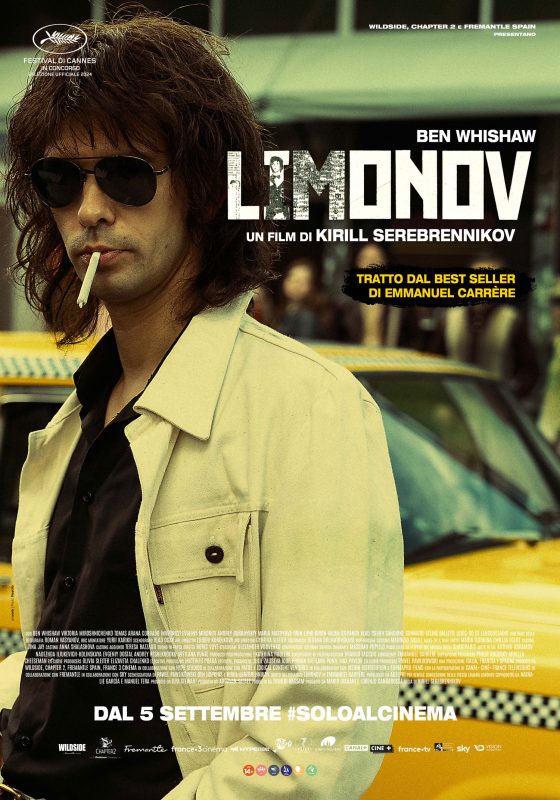
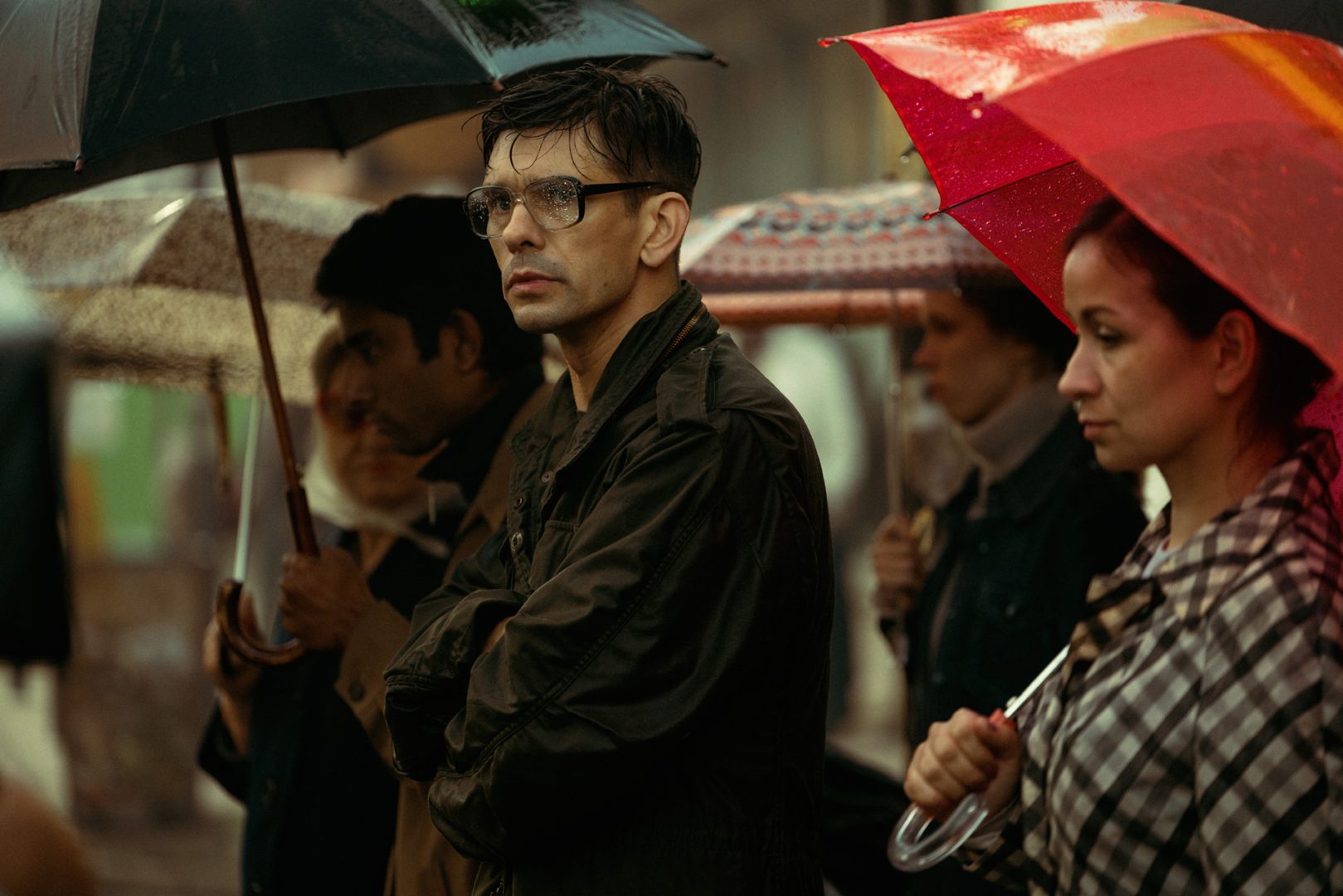
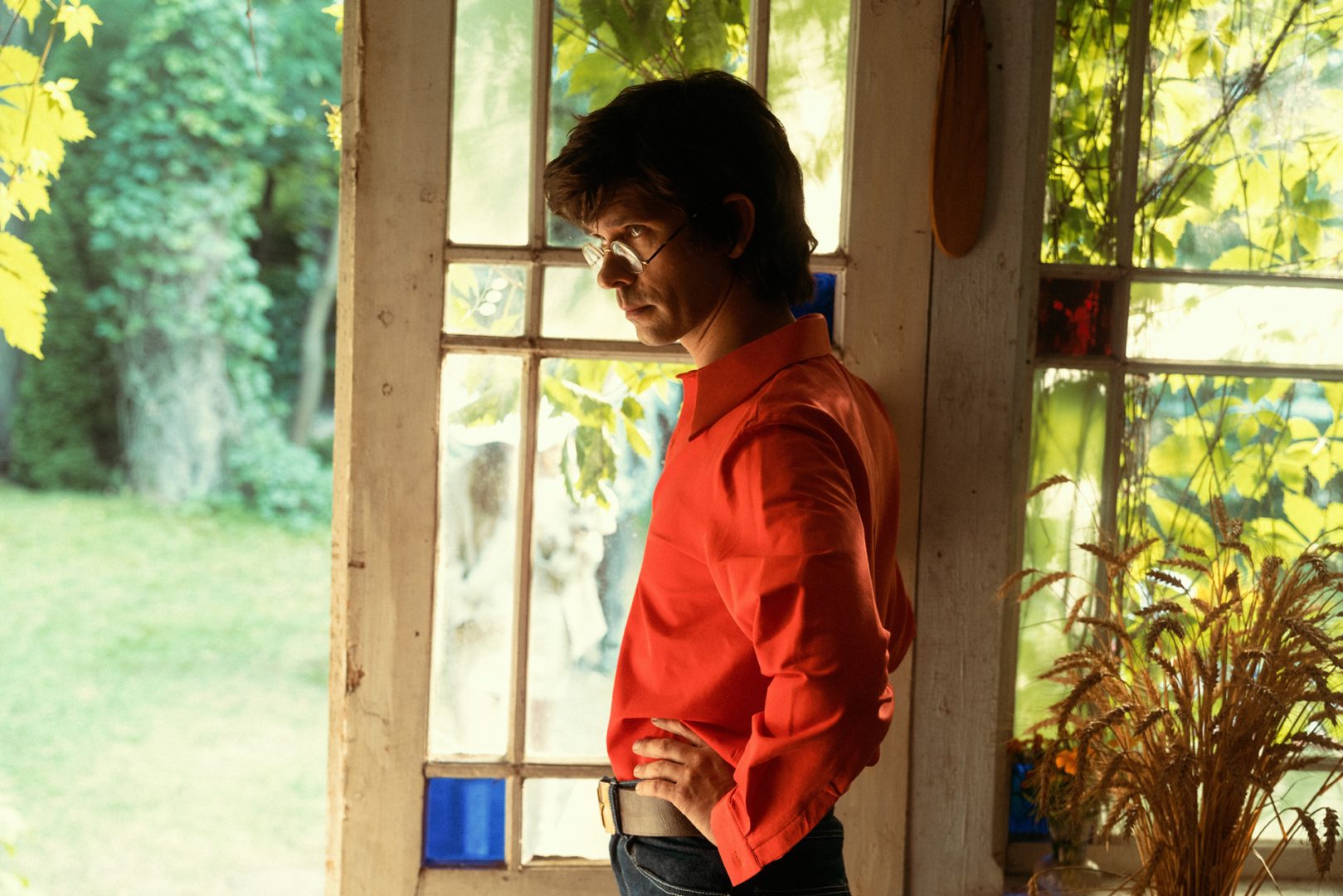
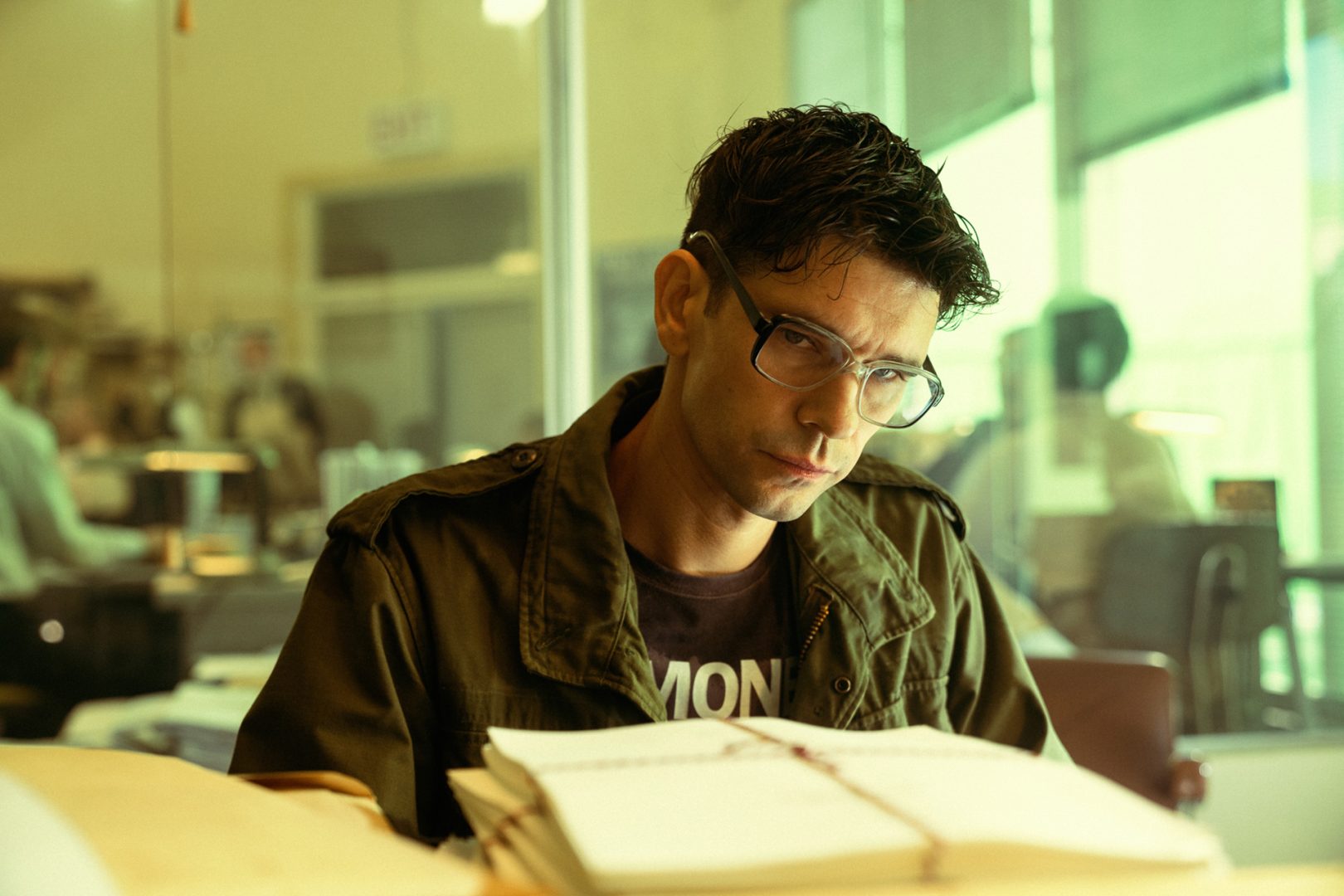
Why did you choose to shoot the film in English with Ben Whishaw, a British actor, as Limonov? English seemed a logical solution for a very international project. It’s an Italian production, based on a French novel and directed by a Russian filmmaker. It’s also an adaptation of a novel that has achieved enormous success worldwide and appeals to a Western audience. Many different actors were suggested to me for the protagonist. I was looking for someone who had a physicalresemblance to Eddie and embodied him on a deeper level. Ben exceeded all my expectations. He truly is a great artist. I experienced immense pleasure watching him transform into Limonov, like a chameleon. It’s worth noting that in life, Ben is the exact opposite of what Limonov was. He is a refined, gentle, and quiet Englishman. Yet in front of the camera, he becomes an authentic Russian named Limonov! There’s something mysterious about this radical transformation, although it is obviously also the result of thorough preparation. Ben absorbed a considerable amount of archival footage; he immersed himself in it. On set, many crew members had known the real Limonov and were practically the film’s first spectators, and they were fully convinced that, without a shadow of a doubt, Limonov was among us.
Filming for the movie was interrupted by the Russian invasion of Ukraine… It’s a unique and tragic story. When the war started, we were supposed to begin shooting the scenes set in New York. We had recreated two New York City neighborhoods outdoors in Moscow. The interiors were to be shot on a soundstage at Mosfilm studios. Then there was the invasion. Embassies urged foreigners to return to their countries, and Ben Whishaw had to leave. We found ourselves, along with the director of photography and the set designer, on those now meaningless sets. After six months, our producers decided to rebuild the New York sets elsewhere in Europe, and we resumed filming. In total, the film took five years to complete.
What kind of impact did these events have on the content of “Limonov”? Essentially, the story itself became more penetrating and more terrible, as did the character. Everything that is happening today originates in Limonov’s writings. He wanted war; he wanted the return of the Soviet Union. The feeling is that we are living in the world he dreamed of, as if the Kremlin had drawn direct inspiration from his texts and from those of Aleksandr Dugin (philosopher and member of the National Bolshevik Party). Considering the current context, I feel an even stronger desire to explore the mechanisms that led to this violence, to understand where Russian fascism originates. I have absolutely no idea what Limonov would have thought of this war or the bombing of his hometown, Kharkiv. I don’t want to speculate because war is not written in the conditional. But I know for sure that he was in favor of the annexation of Crimea and that he supported the separatists, whom he nevertheless considered not radical enough, to the point of accusing Russia of weakness.
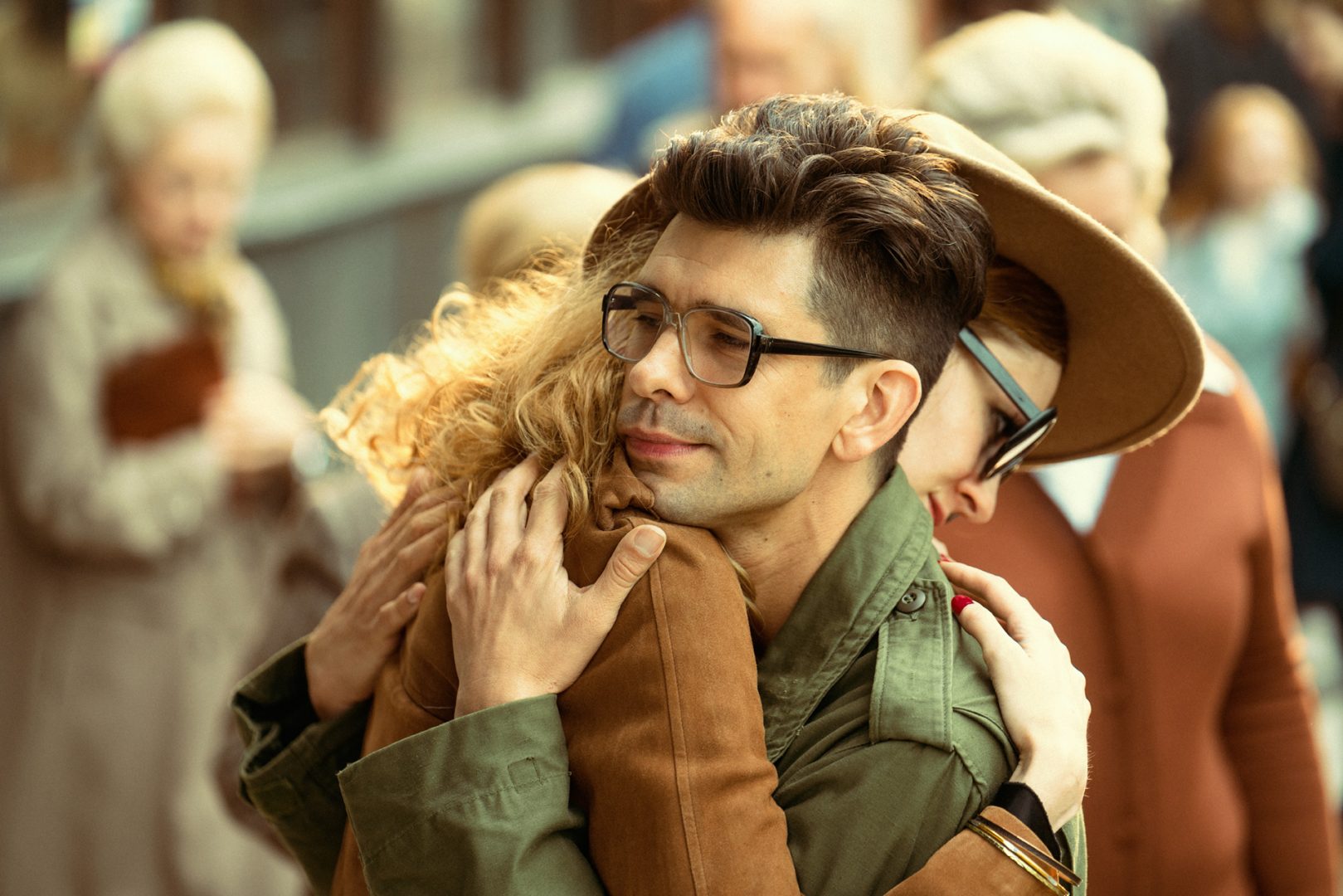
Can you tell us about the film’s spectacular cinematography? First of all, recreating that era – the USSR of the 60s-70s and then the 90s, or even New York of the 70s – was a challenge. I wanted maximum authenticity. We used images from the time to recreate an extremely dirty New York, full of rats and abandoned garbage, hell on earth. I’m very curious to hear the opinion of American viewers about those scenes. We also looked for extras whose faces resembled those of thepeople of those years. We worked on costumes and the general atmosphere. It was exhilarating. Stylistically, the film is similar to a comic book or a collage. I wanted to use all formats: square with black and white images for the Soviet Union, then a wide and colorful format for the United States. Cinematography is my great passion. I drew heavily from archives. As the title indicates, this film is a "ballad," a cinematic ballad, borrowing rhythm and alliterations from poetry, weaving together time and people. In Russian, a ballad is also a form of medieval singing accompanied by dance. Music is particularly important in this film. I chose the songs even before filming began because I wanted viewers to always hear what Eddie had in his head. I worked with a Russian group, Shortparis, who reinterpreted several well-known songs by Tom Waits, Lou Reed, and The Velvet Underground in a fresh way, adding a modern touch. And then the composer Massimo Pupillo wrote the original music for the film, which I find wonderful, mixed with different sounds, in different languages, truly powerful.
In conclusion, how would you describe the character of Limonov? Controversial, contradictory… These are the keywords to understand Limonov. Once again, I’m not talking about the historical figure, but about my character, the lyrical Eddie. As Emmanuel Carrère says: he’s like a novel hero; he has no moral register. Yet, he has something poetic about him. He is an alternative poet; he is in love; he is passionate. Then he becomes a militarist, imperialist, and fascist. He begins to hate the whole world as a result of the loss of his great love, Elena, and also because he fails to achieve the glory he aspires to. He is truly an anti-hero, a kind of Russian "Joker."